
Optional Needs

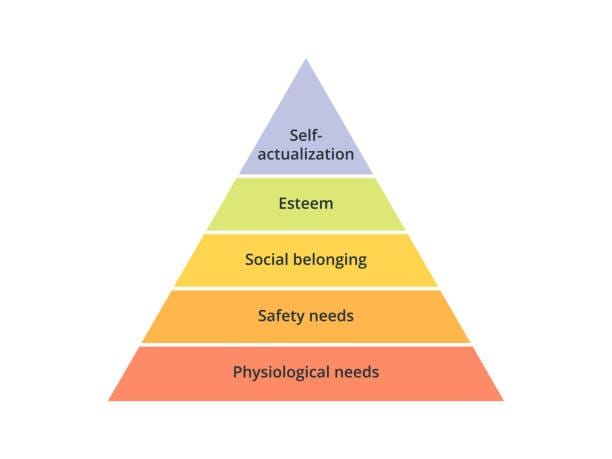
In 1943, Abraham Maslow proposed a theory of motivation known as the Hierarchy of Needs. He wanted to describe why people did what they did, and didn’t like Freud’s opinion that we are all driven by sexual urges and subconscious conflict, or Skinner’s focus on behavior as a response to stimuli and reinforcement.
Maslow’s theory was logical: First, we take care of our basic needs, like food, water and safety. When those things seem stable, focus shifts to relationships - family, friends, love and belonging. Then, feeling connected, we work on ourselves, developing skills, competence and confidence. The highest need for Maslow was something he called self-actualization, which meant becoming the best version of ourselves. Later, he topped it off with transcendence, or devotion to something beyond oneself.
Maslow’s framework greatly influenced thinking about human behavior and motivation because it made sense: First, the basics, then the rest.
How we think about needs depends on how we define them. It could easily be argued, for example, that seeking food and escaping from predators are instincts, as the built-in urge to avoid starvation, dehydration and becoming food for other creatures is not equivalent to the desire for connection, competence and creative expression.
Maslow recognized these distinctions, referring to the lower level as “deficiency needs” and those above as “growth motivation.”
We are capable of enduring pain and delaying gratification, and do both most days. We all do the best we can with whatever comes our way each day. Perhaps unsurprisingly, we do not place our needs first.
This may seem counterintuitive, but there are many reasons we neglect our needs. Beyond instinctual self-preservation and survival, we rarely, consciously define our needs, which permits us flexibility when deciding what to do and when.
Take sleep, for example, which we all agree is something we need. When it comes to the question of how much, however, reasonable people disagree. The idea that 8 hours of sleep per day is optimal came not from scientific experiments, but from simply dividing the number of hours in a day by 3. Biologically, most people function optimally with between 7 and 9 hours per day, but many of us require more or less.
In 1964, 17 year old Randy Gardner was the test subject for his own science fair experiment. His aim was to stay awake for as long as possible, which he did for 11 consecutive days. To allay suspicions that he simply showed up without any other ideas, he made sure an expert sleep researcher was present.
Randy developed cognitive impairment, mood swings, hallucinations, memory and coordination problems, but fully recovered after sleeping it off. Most humans are not capable of staying awake that long, and succumb to involuntary microsleep episodes after 48 wakeful hours: The mind and body force us to sleep, even for a few minutes at a time.
Needs are flexible - to a point. Some, if neglected too long, will result in health problems and ultimately shorter lifespan. A lot of things we think of as needs are important to quality of life, not life or death.
We need to eat, but we can go without food for weeks. We need to drink water, but can do without that for days. We live longer, more satisfying lives with strong social connections and love, but it is possible to live unhappily in isolation. Moving our bodies regularly makes our minds clearer and muscles stronger, but we can survive with very little exercise.
Undone needs are those we intend to address but do not. Our conscience is clear when we meet expectations and obligations, or postpone our needs to make room for fun. When we decide enough is enough and resolve to properly care for ourselves, only to continue putting everyone and everything else first, good intentions get shoved back into the void for the same reason lingering shoulds and wants are locked away: To avoid confronting them every day.
Self-sacrifice often involves delaying or neglecting our own needs for the well being of others. Sometimes this is necessary, like parents skipping meals and staying awake to care for their children, or rescue workers fighting through fatigue and hunger to save lives. But self-sacrifice can become self-destructive when personal needs are reflexively sidelined to make room for all shoulds and musts.
True needs can only remain undone at the expense of our physical and mental health. Skimping on sleep, eating whatever is nearby at random times and moving our bodies only when absolutely necessary may seem to save time in the moment, but offer poor return on investment.
If following through with our intentions weakens the Undone’s grasp on our collective subconscious, then a firm foundation of basic self care strengthens our ability to make it a fair fight.
As such, we can agree that certain needs are foundational, meeting exclusion criteria for conscious, continuous consideration. In other words, they are not worth thinking about, because they are simply necessary.
Foundational needs include eating, sleeping, hydrating and exercising. If we make these part of our routines, we do not have to decide and plan when, where and how they’ll happen.
Leaving needs undone, even temporarily, leaves us feeling tired, hungry, weak and irritable. Having the energy to observe, consider, decide and do things is challenging enough without self-imposed impairment.
Maslow said people are motivated by survival, connection, competence and transcendence. He recognized, however, that we can feel dissatisfied and unfilled despite being well-fed, secure, connected and objectively successful. He believed this state of psychological tension resulted from unrealized potential.
He called it “metapathology.”
We know it as the Undone.